Do you need a licence to sell at a car boot sale?

Do you need a licence to sell at a car boot sale?
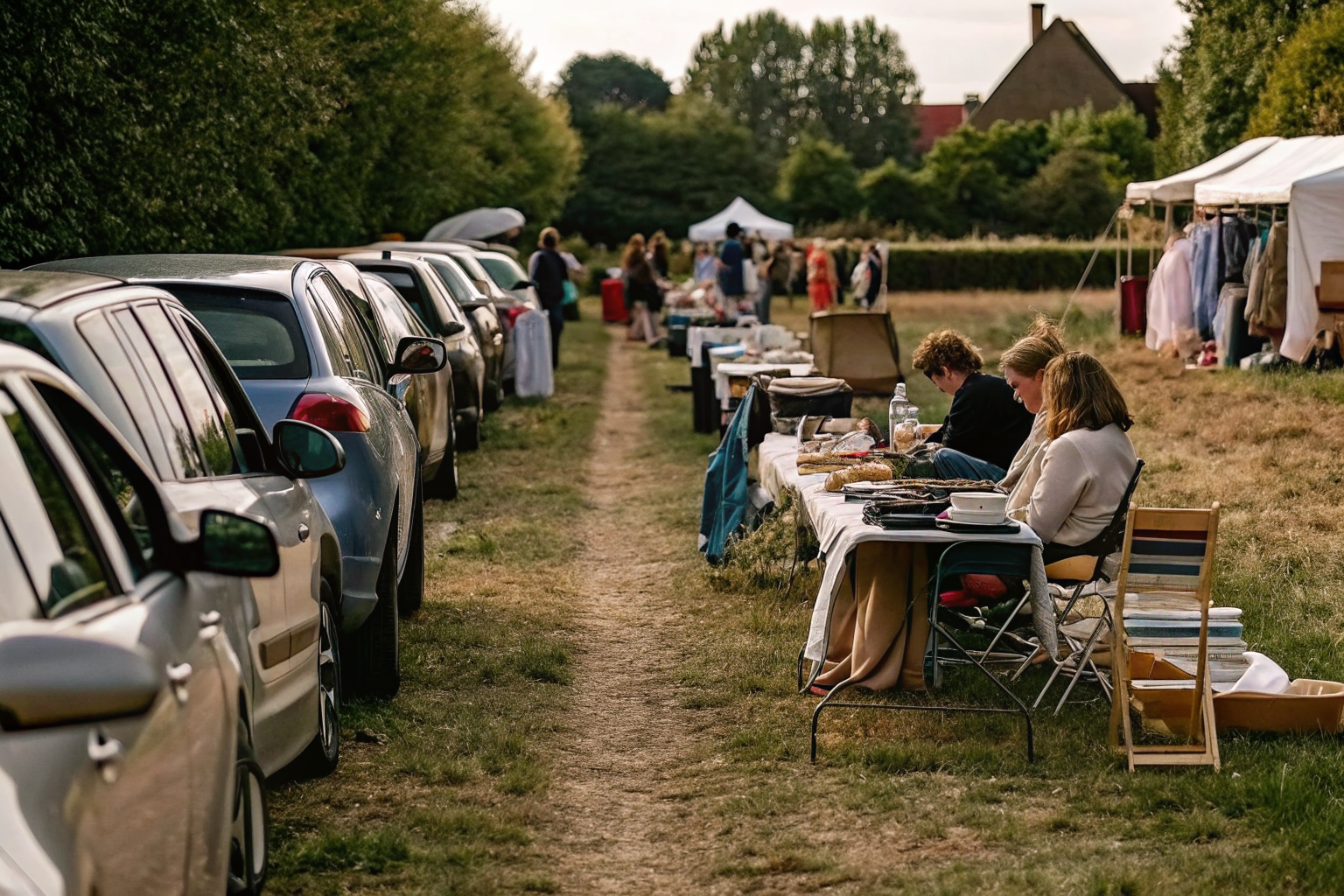
For a normal Sunday clear-out, no. Car boot sales are organised events held on private land, and the organiser holds whatever permissions the site needs. You turn up, pay your pitch fee, and sell.
Where it gets more complicated is when you stop being someone clearing out the loft and start being a trader. That's the line that matters, and it has nothing to do with how much you sell in a day.

When does selling become trading?
Selling your own second-hand possessions isn't trading, however many of them there are. Emptying a deceased relative's house over six Sundays is still not trading.
Buying things specifically to sell on is. So is making things to sell. Once you're doing that, three things change:
- HMRC treats the income as trading income, and the £1,000 trading allowance becomes the threshold that matters
- Consumer law starts to apply — buyers get rights against a business seller that they don't get from a private one
- Trading Standards can take an interest in what you're selling and how you describe it
Nobody issues you a licence for crossing that line. You just take on obligations you didn't have before. Our guide to tax on honesty box takings covers the HMRC side in detail.
Do you need a street trading licence?
Almost certainly not at an organised boot sale. Street trading licences, issued by your council under the Local Government (Miscellaneous Provisions) Act 1982, apply to selling in the street or on land next to it. A field behind a pub isn't a street.
It's your own gate you want to think about. If you set up a table on the verge outside your house rather than at an organised event, that may well be street trading, and the council will want asking. On your own driveway, generally not.
Can you sell food at a car boot sale?
You can, but this is where a real registration requirement kicks in. If you're selling food you've made — cakes, jams, chutneys — you need to register as a food business with your local council. It's free, it takes about ten minutes online, and you're supposed to do it at least 28 days before you start trading.
.png)
You'll also need to handle allergen information. Anything you've packed before the customer arrives needs a full ingredients list with the 14 regulated allergens emphasised. Our guide on allergen labelling walks through what goes on the label.
Selling a few unopened jars of shop-bought jam from your cupboard is a different matter entirely — that's just second-hand goods.
What can't you sell at a car boot sale?
Some things are off the table regardless of whether you're trading:
- Alcohol — needs a premises licence or a temporary event notice. Not something an individual seller can do on a whim.
- Counterfeit goods — a criminal offence, and boot sales get spot-checked by Trading Standards.
- Age-restricted items — knives, fireworks, tobacco, vapes, solvents. There's nobody checking ID at a trestle table.
- Puppies and kittens — third-party sales have been banned in England since 2020 under Lucy's Law.
- Recalled or unsafe goods — particularly older electricals and cot or car-seat equipment.
Two categories catch people out. Upholstered furniture must carry its fire safety labels if you're selling as a trader. And second-hand electricals must be safe to use — if you're trading, that's a legal duty, not a courtesy.
Do you need insurance?
Not legally, for a private seller clearing out a garage. Most organisers carry public liability for the event itself.
If you're trading regularly, public liability insurance is worth having. It's usually inexpensive for a market trader, and it covers the gazebo-blowing-over sort of problem that occasionally happens in a field.
What about the organiser's own rules?
Separate from the law, and often stricter. Organisers commonly ban trade sellers on certain days, restrict food stalls to booked pitches, or bar particular categories outright. Some run trader-only early entry at a higher fee.
Worth a phone call before you load the car, particularly if you're selling anything other than household bric-a-brac.
The short version
Clearing out your own things at an organised boot sale: no licence, no registration, nothing to tell anyone. Buying to resell: no licence either, but you're a business now, with the tax and consumer-law duties that follow. Selling food you've made: register with the council, free, and do it in advance.
None of it is a barrier to getting started — it's just worth knowing which side of the line you're on. If you're setting up something more permanent than a Sunday pitch, our guide to setting up an honesty box stall covers the practical side.
Common questions
Do I need a licence to sell at a car boot sale?
No. At an organised car boot sale on private land, the organiser holds the permissions for the event. Individual sellers don't need their own licence.
Is there a limit on how much I can sell?
Not a legal limit. But if your income from selling passes £1,000 in a tax year and you're trading rather than clearing out your own things, you need to register for Self Assessment.
Do I need to register as a business?
Only if you're trading — buying or making goods to sell. Selling your own possessions isn't a business, no matter how much you shift.
Can I sell homemade cakes at a car boot sale?
Yes, but you must register as a food business with your local council first. It's free and takes minutes, and you'll need allergen information available for what you're selling.
Do the rules differ in Scotland, Wales or Northern Ireland?
The broad picture is similar, but licensing and food registration are handled differently in each nation. Check your own council's website — it's the quickest way to get a definite answer.
What if the boot sale is on the roadside?
If it's on the highway or land adjoining it, street trading rules may apply and the organiser needs council consent. That's their responsibility, not yours, but it's worth knowing if you're setting up alone on a verge.
Do I need a licence to sell at a car boot sale in the UK?
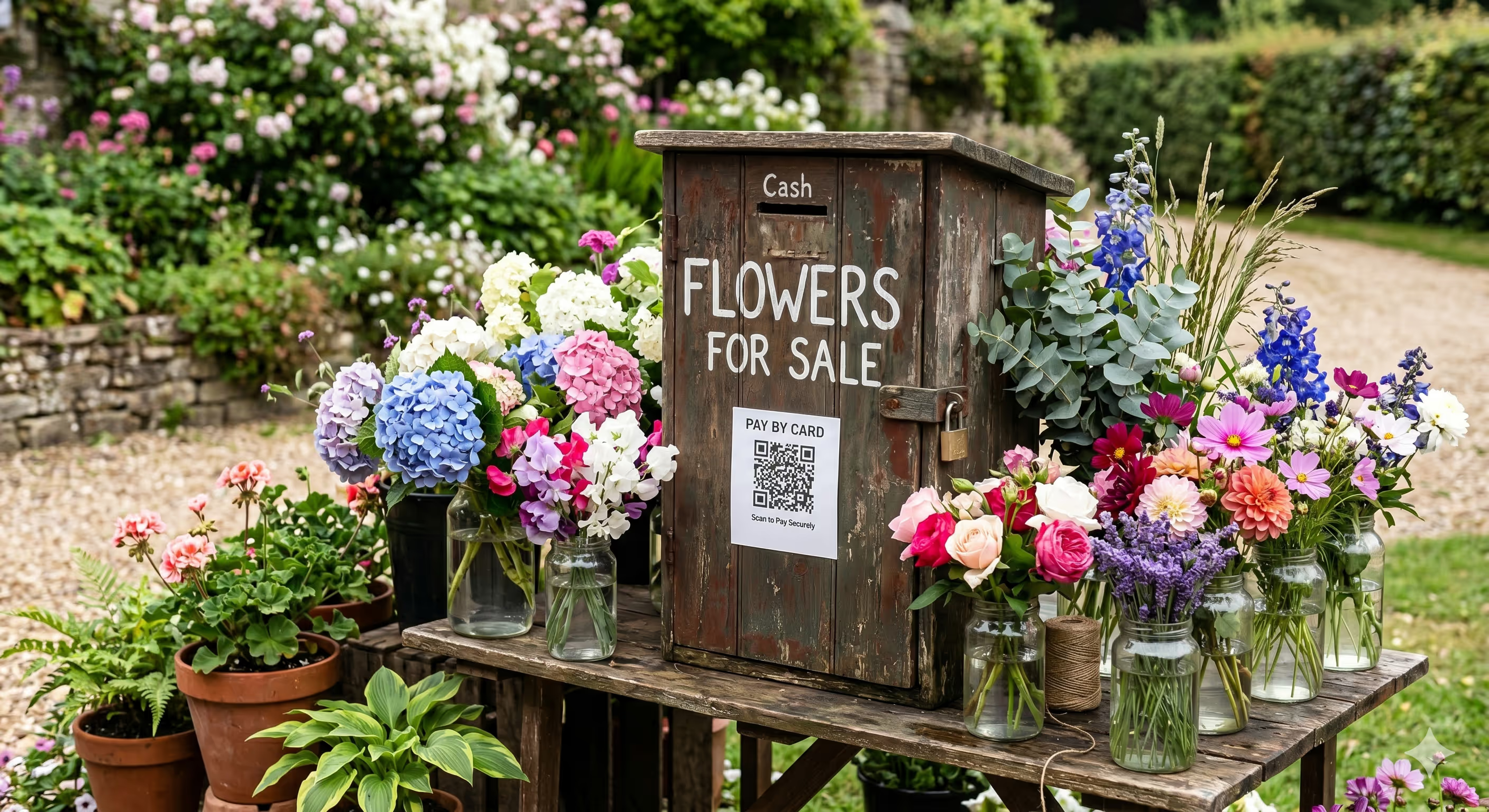
Sorted on the rules? Now get paid properly
Once you know where you stand, the practical bit is getting paid. A printed QR code lets buyers pay by card without a machine — no monthly fee, and nothing to declare that you weren't declaring anyway.