What to write on an honesty box sign

.avif)
A sign has one job
Not to be pretty. Not to tell your story. To make a driver decide to stop before they have gone past.
Everything else — the prices, the note about the hens, the QR code — happens after they have pulled in. Those belong on the stall, not on the sign at the road. Trying to do both jobs with one board is why most honesty box signs fail: they are readable at walking pace and invisible at forty.
So think of it as two signs. One that stops the car, and one that runs the stall.
The sign that stops the car
Two pieces of information, and no more:
- What it is — EGGS. LOGS. PLANTS. One word if you can manage it.
- What it costs — £2.50. Not "reasonably priced", not "honesty box". The number.
That is it. "FRESH EGGS £2.50" outsells a beautifully lettered board explaining your smallholding philosophy, every time, because the second one cannot be read from a moving car.
A useful rule of thumb from road signage: roughly an inch of letter height for every ten feet you want it read from. At thirty miles an hour a driver covers about forty-four feet a second, so if you want two or three seconds to decide, you are asking them to read from a hundred feet or more — which means letters around ten inches tall. Most homemade signs are a third of that.
Dark letters on a pale background beat pale on dark, and both beat anything low-contrast. Skip the script font. It looks lovely up close and turns to mush at distance.
The sign at the stall
Once they have stopped, you have their full attention and can use more words. This one needs:
- A price for everything. Every item, no exceptions. An unpriced item is one people leave rather than guess at.
- Round numbers. £1, £2, £3, £5. £2.70 is how you end up with £2.50 in the tin.
- How to pay. Both ways if you offer both — see below.
- Your first name. "Eggs from Sioned's hens" outperforms an anonymous board, and stalls that feel like they belong to a person get stolen from less. Our guide to honesty box theft covers why.
- A chalkboard patch for whatever is seasonal. It signals the stall is tended, which matters more than it sounds.
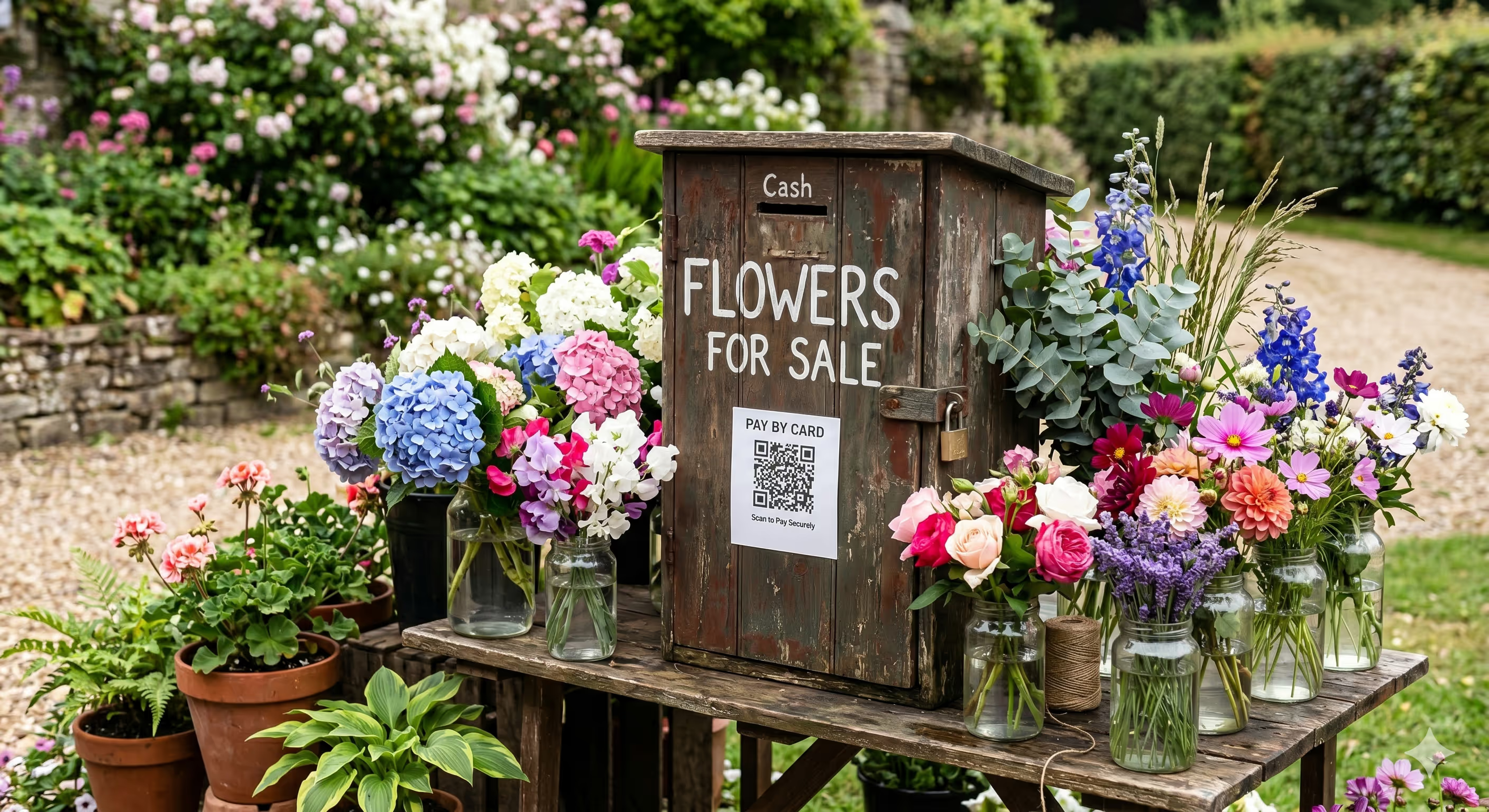
What to write next to a QR code
If you have added card payments, the wording next to the code does real work. People need to know three things before they will get their phone out: that it is card, that it is quick, and that there is nothing to install.
Something like: "Card payments welcome — scan with your phone camera. No app needed."
The "no app needed" line matters more than you would think. A lot of people assume a QR code means downloading something, and that assumption alone loses sales. Say it plainly.
Keep the code big enough — a hand's width across is plenty — and keep it out of direct glare and standing water. A code behind wet perspex at midday can be genuinely unscannable.
Weather is what kills signs
Most honesty box signs die of the same thing: a laminated sheet of paper that took on water at one corner in November and went cloudy.
Roughly in order of how long they last:
- Paper in a sealed plastic wallet — a season if you are lucky. Free, and completely fine for prices you change often.
- Proper laminate — a year or two if the edges are sealed. It is always the edges.
- Painted wood — years, and it suits a gate. Needs redoing eventually.
- Aluminium composite or exterior-grade acrylic — the practical choice for a permanent roadside sign.
- Engraved slate — outlasts the stall. Does not fade, does not peel, and does not care about a Welsh February.
A sensible split: something permanent for the bit that never changes — your name, the QR code, "card payments welcome" — and something cheap and rewritable for prices and stock, which change constantly.
Words that cause trouble
Two things worth knowing before you letter a board.
"Organic" is legally protected. You cannot describe produce as organic in the UK unless you are certified by an approved control body. It is not a loose adjective for "grown without sprays" — using it uncertified is an offence. If you want to say something true instead: "no sprays used", "grown in our garden", "free range" for eggs from genuinely free-range hens.
Descriptions have to be accurate. "Fresh today" on Thursday's eggs, or "homemade" on something you bought in, is a misleading description. Nobody is going to prosecute a gate stall over a stale sign, but your neighbours will notice, and the whole thing runs on people believing you.
If you are selling food you have made, the sign is not where allergen information belongs — that goes on the item. Our guide to allergen labelling covers what has to be on the label.
Where the sign goes
On your own land, at the boundary, angled towards oncoming traffic rather than flat along the road.
The verge is usually highway land and a sign there can need permission — worth a call to the council before you concrete anything in. And do not put a sign where stopping for it is dangerous. A stall on a blind bend that makes cars brake hard is a problem you do not want, whatever it does for sales.
If you are set back down a lane, a small pointer at the junction does more than a bigger sign at the stall.
The five most common mistakes
- Letters too small to read at driving speed
- No price on the road sign
- A price list that has not been updated since last summer
- A QR code with no explanation next to it
- Cursive lettering that is beautiful at two feet and unreadable at fifty
Common questions
What should an honesty box sign say?
At the road: what you are selling and what it costs, in the largest letters that will fit. At the stall: a price for every item, how to pay, and your first name.
How big should the letters be?
Roughly an inch of letter height per ten feet of reading distance. For a road at thirty miles an hour, that means around ten inches — much bigger than most people expect.
Do I need permission for a sign at my gate?
On your own land, a small sign is generally fine. On the verge or highway land it may need consent, and a large or illuminated sign can need advertisement consent. A quick call to the council settles it.
Can I call my vegetables organic?
Only if you are certified organic by an approved control body. Otherwise use an accurate description like "no sprays used" or "grown in our garden".
What is the most weatherproof option?
Engraved slate or aluminium composite for anything permanent. Keep prices on something rewritable, because they change and a permanent sign with the wrong price is worse than no sign.
Should the QR code go on the road sign?
No. Nobody scans a code from a moving car. It belongs at the stall, where somebody is standing still with their phone out.
What should I write on an honesty box sign in the UK?
Got the sign right? Now the paying bit
Once the sign has stopped the car, the QR code does the rest — including for the people who stopped without a coin on them. Print the code free, or order a slate plaque that will still be readable in ten winters.