How to take card payments at a car boot sale

.avif)
Can you take card payments at a car boot sale?
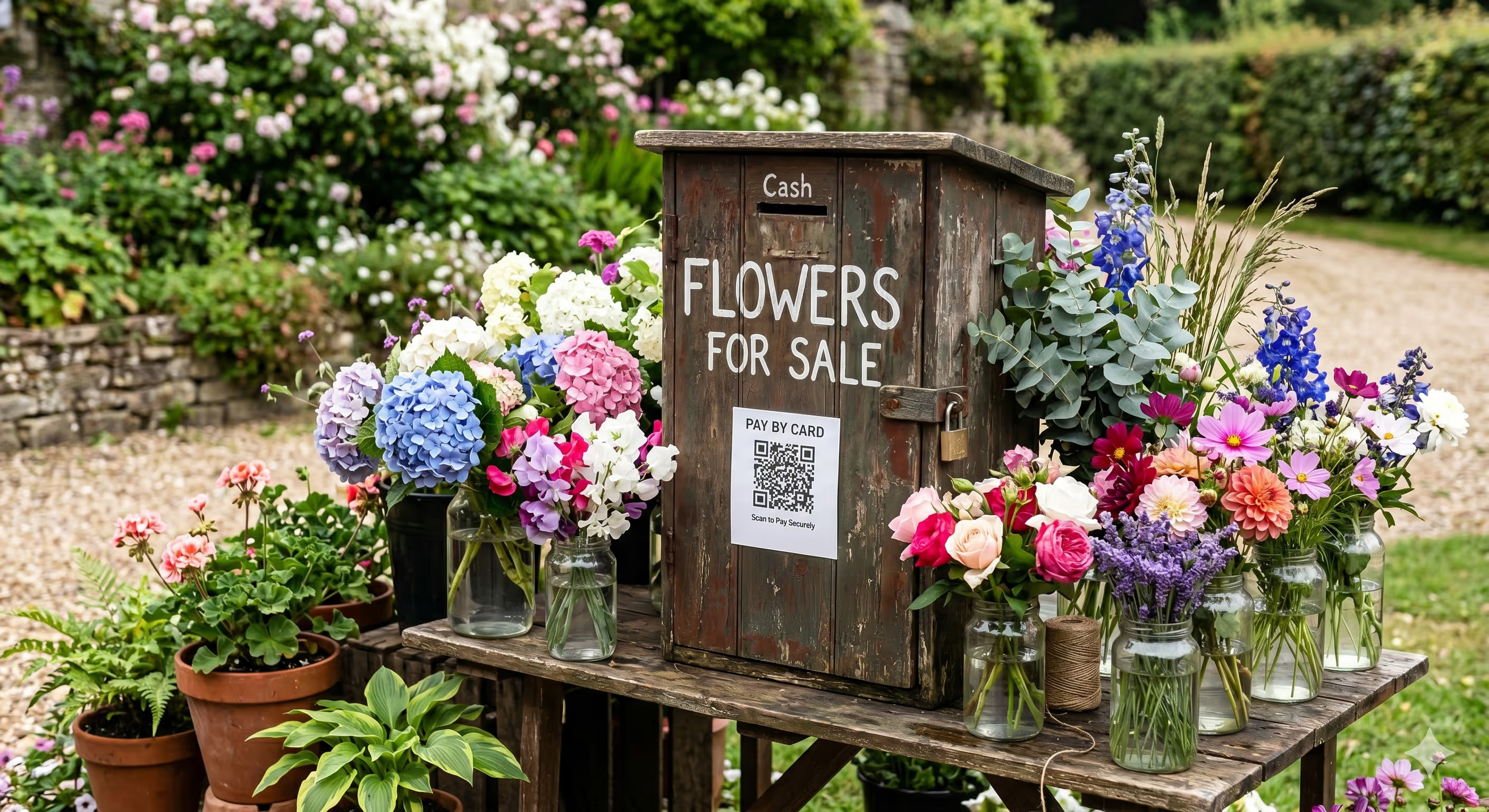
Yes, and you don't need a card machine to do it. The simplest setup is a printed QR code propped on your table. A buyer points their phone camera at it, the payment page opens in their browser, they type in the price you've agreed, and they pay by card. The whole thing takes about fifteen seconds.
This matters more every year. According to UK Finance, cash fell to 9% of all UK payments in 2024, down from 12% the year before — the first time it has dropped out of the top two ways people pay. Plenty of the people wandering past your pitch left the house without a coin on them.
Do you need a card machine?
No. Card readers like SumUp and Zettle work perfectly well, but they cost £30 to £60 up front, need charging, need pairing with your phone, and need you standing there to operate them. For a stall you run once a month, that's a lot of kit to look after.
A QR code has none of that. It's a piece of laminated card. It doesn't run out of battery, it doesn't need pairing, and if it blows off the table you print another one.
How does a QR code payment actually work?
Three steps, and only one of them is yours:
- You agree a price with the buyer, same as always.
- They scan the code with their phone camera and type the amount in.
- The payment lands, you both see it confirmed, and they walk off with the lamp.
Nothing to download on either side. If they can order a takeaway on their phone, they can pay for your lamp.
What does it cost you per sale?
With HonestyBox it's 5% plus Stripe's processing fee of 1.5% + 20p. Nothing monthly, so a winter with no boot fairs costs you nothing at all. On a typical spread of prices that works out as:
- £2 sale — 10p to HonestyBox, 23p to Stripe. You keep £1.67.
- £5 sale — 25p to HonestyBox, 28p to Stripe. You keep £4.47.
- £10 sale — 50p to HonestyBox, 35p to Stripe. You keep £9.15.
- £20 sale — £1.00 to HonestyBox, 50p to Stripe. You keep £18.50.
- £50 sale — £2.50 to HonestyBox, 95p to Stripe. You keep £46.55.
The 20p fixed part of the Stripe fee is what stings on small sales. It's why cash still earns its place on a table full of 50p paperbacks.
Use our handy pricing calculator
Is it worth it on a £2 item?
On a £2 sale you'd hand over about 33p. That's a real chunk, and if your whole table is priced at a pound or two, cash is still your friend.
But run it the other way round. How many times has someone put something back down and said “I've only got a fiver on me”? One £15 sale saved pays for a whole day of small-item fees. The code isn't there to replace cash — it's there to catch the sales cash was quietly losing you.
What if there's no signal in the field?
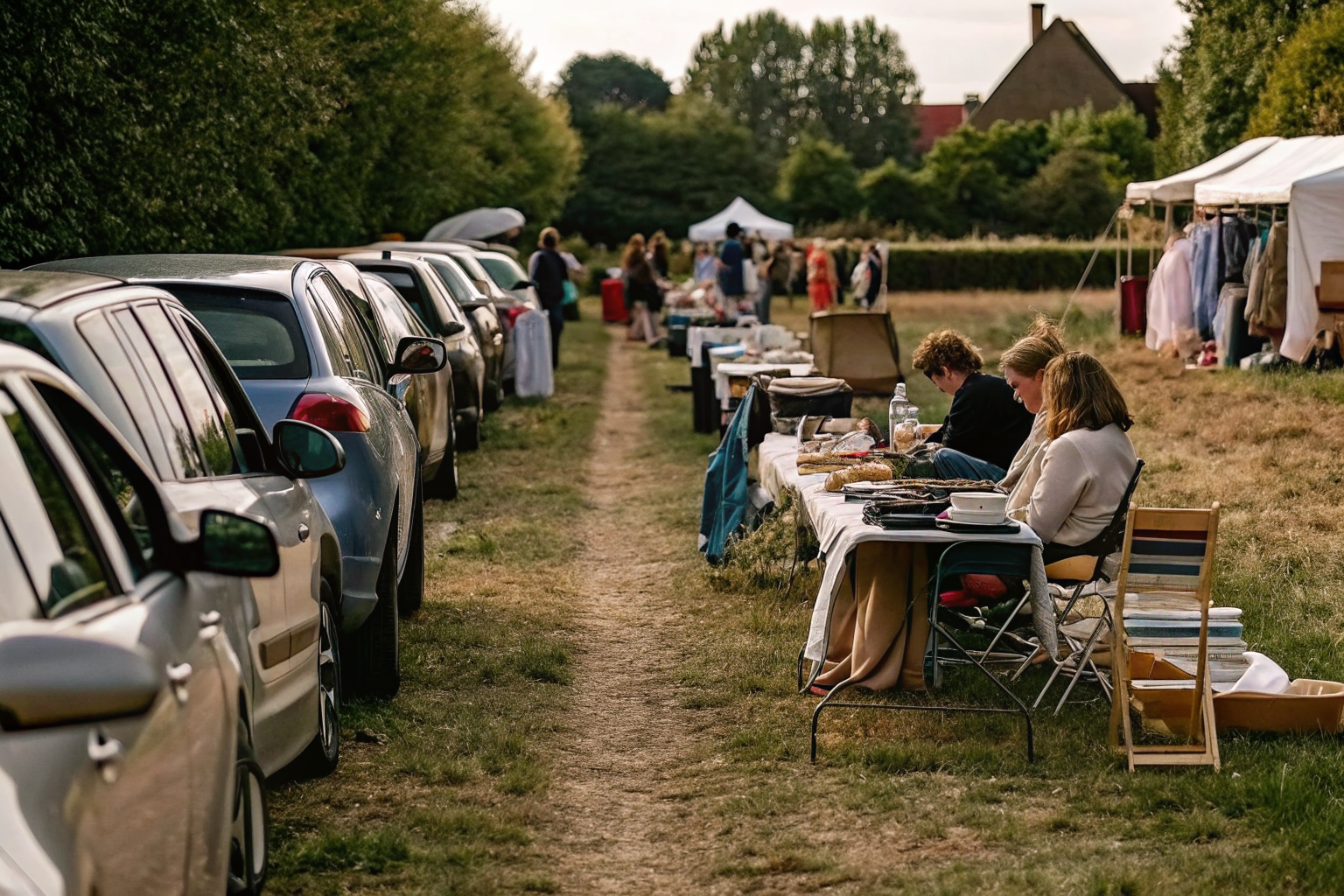
Boot fairs are often in fields, and fields are often where the bars run out. Two things help. First, your buyer is probably on a different network to you, so test with someone else's phone before you write the place off. Second, keep the tin out anyway — the code is a supplement, not a replacement.
What if you haggle the price down?
That's the advantage of letting the buyer enter the amount rather than fixing prices in advance. You settle on £12 instead of £15, they type in £12. No fiddling with a card reader keypad, no cancelling and starting again.
Should you still bring the cash tin?
Yes. Every time. Boot fairs run on cash and always will — you'll want a float for change, and plenty of people simply prefer it. The point of the code is the customers who would otherwise have walked away.
What to put on your table
- The QR code, laminated or in a photo frame, propped up where people can see it while they're still deciding
- A short line of text: “Card payments welcome — scan to pay”
- Your cash tin and a float
- Your phone, so you see payments land
Print the code once. It doesn't change week to week, so it lives in the box with your tablecloth and comes out every time. There's more on the practicalities on our boot fairs and markets page.
Common questions
Do I need to tell HMRC about car boot sale earnings?
If you're selling your own second-hand belongings, that isn't trading and there's nothing to declare. If you're buying stock specifically to sell on, it is, and the £1,000 trading allowance is where the line sits. Our guide to tax on honesty box takings goes through it properly.
Can I use the same QR code every week?
Yes. Your code doesn't change. Print it once and bring it to every fair.
What if two people want to pay at the same time?
Not a problem. Each payment runs on the buyer's own phone, so there's no queue at a single machine.
Do buyers need to download an app?
No. The phone camera opens the payment page in their browser. Nothing to install, on either side.
How quickly do I get the money?
Payments go into your Stripe account and pay out to your bank on a rolling schedule, typically within a few days of the sale.
How can I take card payments at a UK car boot sale without buying a card machine?
Ready for the next boot fair?
Print one QR code, bring it to every fair, and stop losing sales to people who left their change at home. No card machine, no monthly fee — you only pay when someone pays you.