How to start a cake shed


Step 1: Know what you're actually starting
A cake shed feels like a hobby. Legally, it isn't. The moment someone leaves money for a brownie, you are running a food business — and the same rules apply to a repurposed cupboard at the end of your drive as to a bakery on the high street.
That sounds heavier than it is. There's no licence to apply for, no fee to pay, and nobody can turn you down. What there is: a registration form, a bit of paperwork about how you keep things clean, and one labelling rule that genuinely matters. An afternoon's work, once.
The one-off school fête bake sale is different — that's not a business and none of this applies. The line is regularity. If you're stocking a shed most weeks, you're on the business side of it.
Step 2: Register with your council (do this first)
Register as a food business with your local council at least 28 days before you start selling. It's free, it's an online form, and registration cannot be refused. Trading without it is a criminal offence, and it quietly invalidates any insurance you're relying on.
People hesitate because registering invites an inspection. Look at it the other way: the inspection is how you find out you're doing it right, and an unregistered shed is the one that gets a formal notice rather than a friendly conversation.
After you register, an environmental health officer will visit — usually within a few months — look at your kitchen, and give you a food hygiene rating. Home kitchens get rated the same as anywhere else. In Wales and Northern Ireland, displaying that rating is a legal requirement; in England it's voluntary, though most sheds pin the sticker up anyway. A 5 on the door does more for sales than any sign you could paint.
Step 3: Get the kitchen straight
There is no legal requirement to hold a food hygiene certificate. The law says food handlers must be trained and supervised proportionately to what they do — which in practice means your EHO will ask what training you've had, and "none" is an awkward answer. A Level 2 Food Hygiene certificate costs £15–£30 online and takes a couple of hours. Get it.
The rest is common sense written down:
- Pets out of the kitchen while you're baking, and no pet bowls on food-prep surfaces.
- Separate storage for business ingredients where you can manage it — a labelled shelf or box is fine, you don't need a second kitchen.
- Written records. Cleaning schedule, where you buy ingredients, fridge temperatures if anything's chilled. The FSA's Safer Food, Better Business pack is free and does the thinking for you.
- Nobody bakes with a stomach bug. Obvious, but it's the one that ends up in the local paper.
Step 4: The allergen rule everyone gets wrong
This is the section to read twice.
If you wrap your bakes before the customer chooses them — a brownie in a bag, a slice in a box, lined up on a shelf for people to pick from — that is prepacked for direct sale (PPDS) under what's commonly called Natasha's Law. It applies explicitly to home bakers selling from home, and it means every single item needs:
- The name of the food — "Salted caramel brownie", not just "brownie"
- A full ingredients list, in descending order of weight
- Every one of the 14 regulated allergens emphasised in the list — bold, capitals, or a different colour. Not a separate note at the bottom. In the list itself.
The fourteen: celery, cereals containing gluten, crustaceans, eggs, fish, lupin, milk, molluscs, mustard, peanuts, sesame, soya, sulphites, tree nuts.
Here's why this matters more for a cake shed than for a bakery counter: you aren't there. In a shop, someone with an allergy can ask. At an unattended shed at nine on a Sunday morning, the label is the entire conversation. There's no fallback, no "let me check for you." Get it wrong and the person with the allergy has no way to protect themselves.
Two things people do wrong. First, blanket "may contain nuts" on everything — precautionary labelling is only appropriate after a genuine assessment of your kitchen, and stamping it on everything just teaches customers to ignore it. Second, assuming loose cakes escape the rule. Sell them unwrapped and you're technically outside PPDS — but you still have to provide allergen information, and unattended means it still has to be written down. Save yourself the distinction and label everything.
A laminated allergen chart on the inside of the door, updated when you change the bake list, is what most well-run sheds do alongside the labels.
Step 5: Build the shed
The shed itself is the easy part. Cake sheds are famously not always sheds — converted chicken coops, old cupboards, a repainted bedside cabinet on legs. Charm outsells carpentry here as much as anywhere.
What actually matters:
- Shade and dry. Direct afternoon sun turns buttercream into soup and dries out everything else. North-facing, or roofed and shaded.
- Off the ground, on legs or a plinth. Slugs are real.
- Wasp-proof from July. An open-fronted shed full of sugar in August is a wasp hotel. Sealed tubs, cloches, or a proper closing door.
- A doorbell camera. Cheap, and it changes behaviour more than a lock does. Our guide to honesty box theft covers the wider picture.
On planning permission: a small, moveable structure on your own land is usually fine, but running a business from it can count as a change of use, especially if it generates regular traffic or you build something permanent. A five-minute informal call to your council's planning team costs nothing and settles it. If you rent, or your mortgage has terms about business use, check those too — and tell your home insurer, because a public liability policy is worth having when strangers walk up your drive.
Step 6: Bake the right things
The shed decides your menu more than your skill does. You want things that are happy at room temperature for a full day.
Good shed bakes: brownies, flapjacks, cookies, traybakes, banana bread, shortbread, tiffin, fruit loaf, scones.
Bad shed bakes: anything with fresh cream, cheesecake, custard fillings, or buttercream in summer. These need refrigeration at 8°C or below, carry a use-by date rather than a best-before, and pull you into temperature records and a much higher-risk category. Some sheds run a fridge and do it properly — just know you're choosing a different level of compliance when you do.
Everything ambient gets a best-before date. Bake small batches, restock often, and take yesterday's out. Selling out by lunchtime is a better problem than tired flapjack at five.
Step 7: Price it so it's worth doing
Work out cost per item — ingredients, packaging, labels, a share of the electricity — then price in round numbers that are easy to pay. Most UK cake sheds sit around £2–£3.50 for a brownie, cookie or slice, with boxes of four or six at a small discount to lift the average sale.
Round pricing isn't just tidiness. It makes the maths obvious to someone standing in the rain deciding whether to bother.
Step 8: Make it possible to pay you
This is where cake sheds quietly lose money. Cash is now around 9% of UK payments — so most of the people who stop at your shed genuinely cannot pay a cash-only setup, however much they want that brownie. They'll look, feel bad, and drive on.
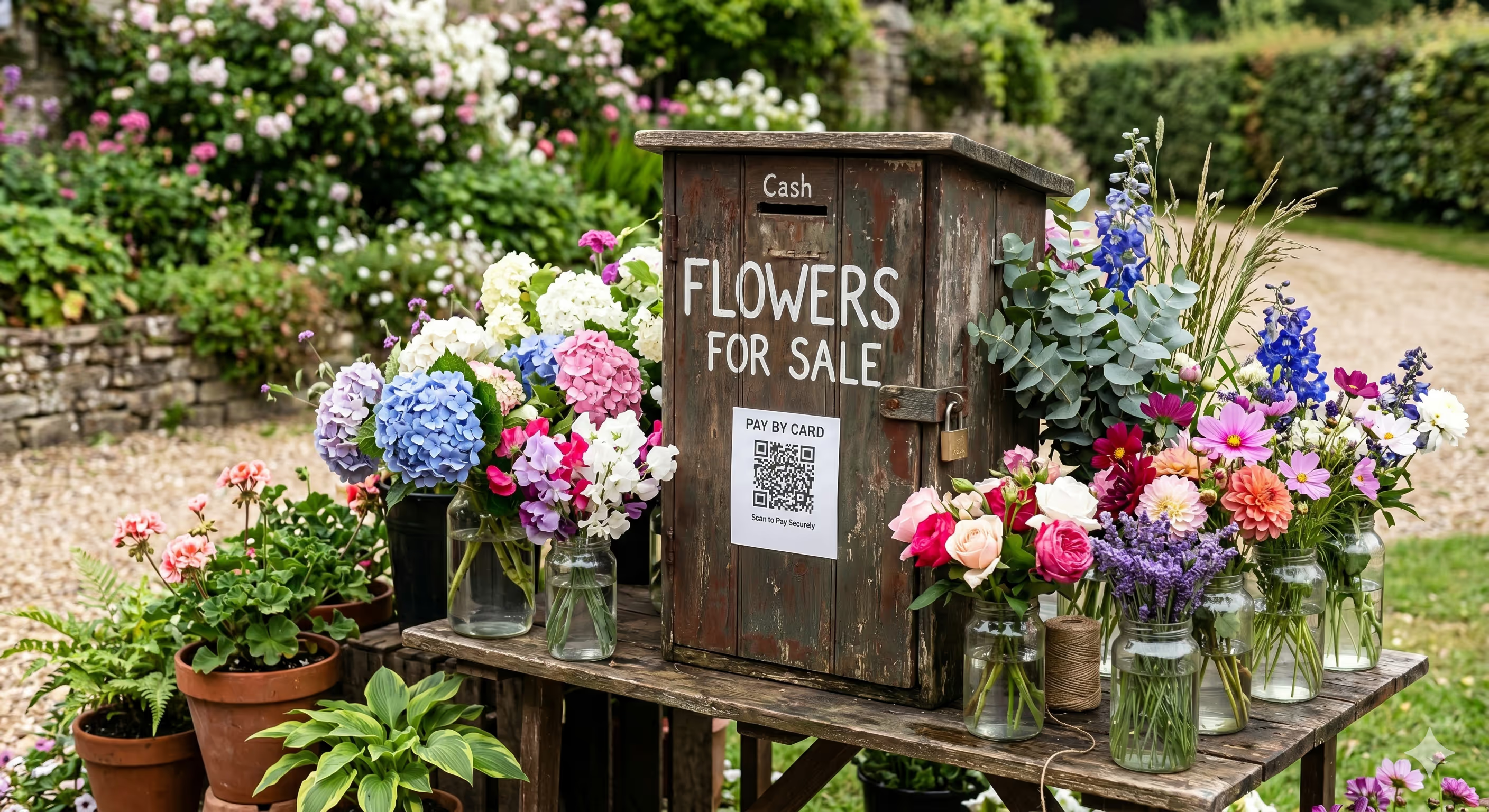
A weatherproof QR code next to the price list solves it. People scan with their phone camera and pay by card, Apple Pay or Google Pay in about ten seconds, no app and no account. Keep a tin for the cash faithful — plenty of regulars still like coins — but the QR code catches everyone else, and it removes the tin as a target at the same time. We've covered how this works for cake sheds specifically.
Step 9: Tell the village
Post a photo in your local Facebook group with your restock time. "Fresh in from 9am Saturday" builds a habit, and habits are what turn a novelty into a Saturday queue. After that the shed markets itself to everyone who drives past — which is the quiet genius of the whole model.
Frequently asked questions
Do I need planning permission for a cake shed?
Usually not for a small, moveable structure on your own land — but running a business from it can amount to a change of use, particularly if it's permanent or brings regular traffic. An informal call to your council's planning department settles it in five minutes.
Do I need a food hygiene certificate to run a cake shed?
Not as a legal requirement. The law requires training proportionate to what you do, and in practice a Level 2 Food Hygiene certificate (£15–£30 online) is what your environmental health officer will expect to see.
Do I have to label every cake?
If it's wrapped before the customer picks it up, yes — name of the food, full ingredients list, allergens emphasised within it. Because nobody's there to answer questions, the label is the only allergen information your customer gets.
Will I get a hygiene rating?
Yes. Registering puts you on the inspection list and your home kitchen is rated like any other food premises. Displaying it is a legal requirement in Wales and Northern Ireland, and voluntary in England.
How much can a cake shed make?
Realistically, pocket money to a few hundred pounds a month, depending on footfall and how often you restock. The sheds that do well are on a walked route or a school run, restock predictably, and don't run out of the thing everybody comes for.
Do I pay tax on cake shed takings?
Once you're past £1,000 a year, Self Assessment enters the picture. Our guide to tax on honesty box takings explains the trading allowance in plain English.
What if someone takes a cake without paying?
It happens far less than you'd expect, and most sellers report the opposite — people rounding up or leaving extra. What sellers actually report about theft has the full picture.
What do I legally need to do to start a cake shed at home in the UK?
Ready for step 8?
HonestyBox gives your cake shed card payments with a single QR code — no card reader, no monthly fees, just 5% when you get paid. Print the code free, or order an engraved Welsh slate plaque that'll outlast the shed.