Will people steal from my honesty box?

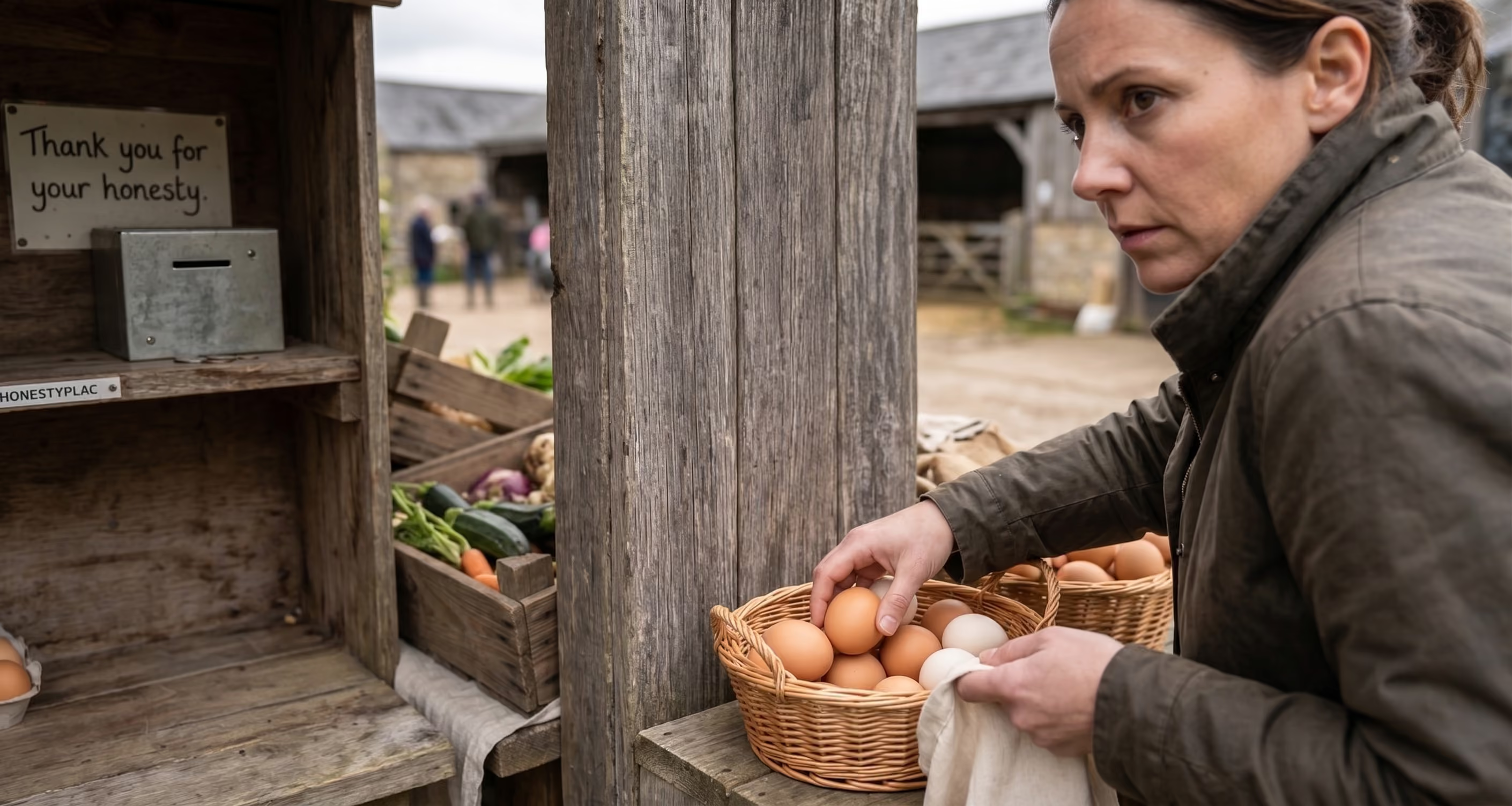
This is the number one worry for anyone thinking about a gate stall, and it's fair enough. You're leaving your produce and your money unattended at the roadside. So what actually happens?
What sellers actually report
Trawl the smallholding forums and you'll find the same pattern again and again. Plenty of sellers run boxes for years without a single problem. One well-worn story: a man selling tomato plants from a card table at the end of his drive, honour system, open cash box — asked whether he got robbed, he said the opposite happened more often. There was frequently too much money in the box for the plants that had gone.
The anxiety is real, though, and it's usually phrased the same way: it only takes one dishonest person to ruin it. That's true — but the numbers still work. If you sell fifty items and one walks off unpaid, you've lost 2%. A market stall would happily take a 2% shrinkage rate, and it doesn't have to stand in the rain all day.
The honest framing: an honesty box with occasional small losses beats no stall at all, every time.
Making theft harder
A few practical habits shift the odds firmly in your favour:
Fix everything down. The box screwed to a post or wall; the cash tin bolted inside it with a coin slot rather than a lid. If the tin can't leave, opportunists move on. The stalls that get properly done over are usually the ones where the whole tin lifts out.
Empty the tin often. A tin holding £4 isn't worth anyone's trouble. A tin visibly stuffed after a sunny bank holiday weekend is. Little and often.
Keep the float tiny — or skip it. Some sellers leave a change box so customers without the right coins can help themselves to change. Kind idea, and it does get pinched. If you offer change at all, a couple of pounds in coins, no more.
Site it well. Within sight of the house if you can, or somewhere passing traffic naturally overlooks it. A small camera (or even a polite "smile, you're on camera" sign) changes behaviour. A camera on your own property covering your own stall is fine — just angle it at the stall, not the road or the neighbours.
Make it personal. Stalls with a name, a photo of the hens, a handwritten sign — people find it much harder to steal from someone than from an anonymous box. This is half the charm of the honesty box anyway. Use it.
The bigger move: take the cash out of the equation
Here's the thing the forums rarely say out loud: the produce is rarely the real target. Eggs and courgettes are hard to fence. The cash tin is the target.
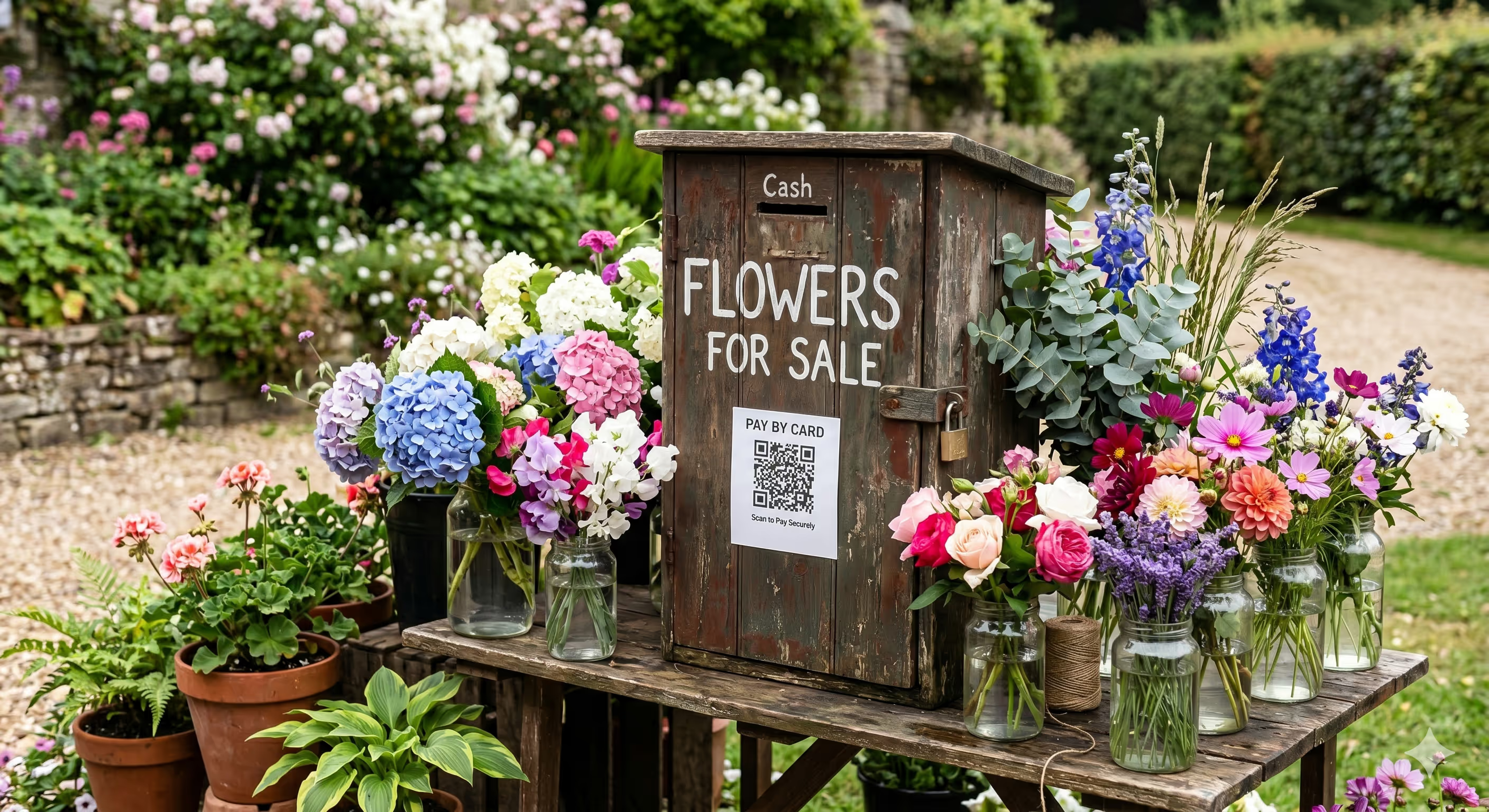
Add a QR code so customers can pay by card, and two things happen. First, there's less cash sitting in the tin overnight — card payments go straight to your bank, so there's nothing to steal. Second, you close the softer loss nobody talks about: underpaying. The person who takes £3 of veg and drops in £1.50 "because they didn't have the right change" isn't stealing, exactly — but a card payment is always the full amount.
You keep the tin for the cash loyalists (we'd never suggest otherwise — the tin is the soul of the thing). The QR code just means the tin no longer has to hold a weekend's takings.
Frequently asked questions
Should I put up a CCTV camera?
If it gives you peace of mind, yes — on your own property, pointed at your own stall, with a visible sign. For most stalls the sign alone does 90% of the work.
What if someone steals the whole box?
It happens, rarely — which is why the box should be fixed down and the tin fixed inside it. Losing a morning's eggs is annoying; losing the nice oak cabinet you built is what actually hurts.
Am I insured against honesty box theft?
Usually not by default. Some household and smallholding policies can cover outbuildings and business-adjacent activity — worth a call to your insurer to ask, especially if your stall holds real value. For a few pounds of eggs and a bolted tin, most sellers simply absorb the risk.
Is it naive to trust people this much?
The whole model has survived for generations at gates across Britain because it mostly works. Trust, plus a screwdriver and a coin slot.
How common is theft from honesty boxes in the UK and how do sellers reduce it?
Want a tin with nothing in it worth stealing?
HonestyBox lets customers pay by card with a QR scan — money goes straight to your bank, not the box. No hardware, no monthly fees.