How to sell cut flowers from your gate

Start with a display you can maintain
A few good bunches are a useful first test. You can learn what local customers want without promising more flowers than your patch can supply.
Choose a sheltered spot on your land where customers can stop safely, read the prices and lift a bunch out without knocking over the rest. Keep the display out of direct sun and check it during the day.
Before putting up a stall or roadside sign, ask your council about any requirements for the location, access and trading arrangements. Tell your insurer how you plan to use the space.
Choose what you can grow reliably
Start with a few flowers suited to your soil, weather and available growing time. A mix of flowering times can spread the work and give you something different to display as the season changes.
- Spring: bulbs such as daffodils and tulips can provide an early display.
- Early summer: consider sweet peas, cornflowers and other flowers that suit your patch.
- Summer into autumn: cosmos, sunflowers and dahlias can give you different shapes and colours.
- Outside the main season: consider dried arrangements or foliage work if you have suitable material and customers for it.
Flowering dates vary with location, variety and the year. Use the RHS guide to growing cut flowers when planning your first patch.
Prepare flowers before displaying them
Cutting is only the first job. Leave time to prepare the stems so customers take home flowers that have had a chance to drink.
- Cut during cool conditions and put stems into water promptly.
- Use clean cutting tools and remove foliage that would sit below the waterline.
- Prepare stems in clean water in a cool place before making up the display.
- Check the needs of each flower rather than treating every stem alike.
The RHS cutting and conditioning guide covers preparation and species-specific care. Keep buckets clean, monitor the water and remove tired stems from sale.
Make the purchase clear
Choose one or two formats to begin with: a small posy in a jar, a wrapped bunch, or individual stems. Label exactly what the price covers.
If a jar is included, say so. If you welcome returned jars, explain where to leave them and check they are suitable before using them again.
Use an accurate description such as “cut this morning” only when it applies to that stock. A short care note can explain how to unpack the flowers and where to find more detailed advice.
Set prices from your costs
Count seeds or plants, growing materials, water, packaging and payment fees. Include the time spent sowing, weeding, cutting, preparing bunches and checking the stall.
Allow for flowers that never reach sale and bunches that remain unsold. Dividing costs only by the number you hoped to sell can make a busy-looking stall less profitable than it appears.
Compare local prices, but do not make undercutting another seller your whole plan. Try a small batch at a price that covers your work, then use actual sales and waste records to decide what to grow next.
Check trading and plant-health requirements
A small gate stall is not automatically outside business rules. If you regularly grow or sell plants or plant products for profit, check the official professional-operator guidance and ask the relevant plant-health authority what applies.
Do not assume advice for cut stems also covers potted plants, imported stock, online sales or supplies to other businesses. Our driveway plant guide explains why the selling arrangement matters.
For individuals, the trading allowance depends on total gross trading income across relevant activities, with exceptions. Read HMRC's allowance guidance and keep records from the start.
Offer cash and card payments
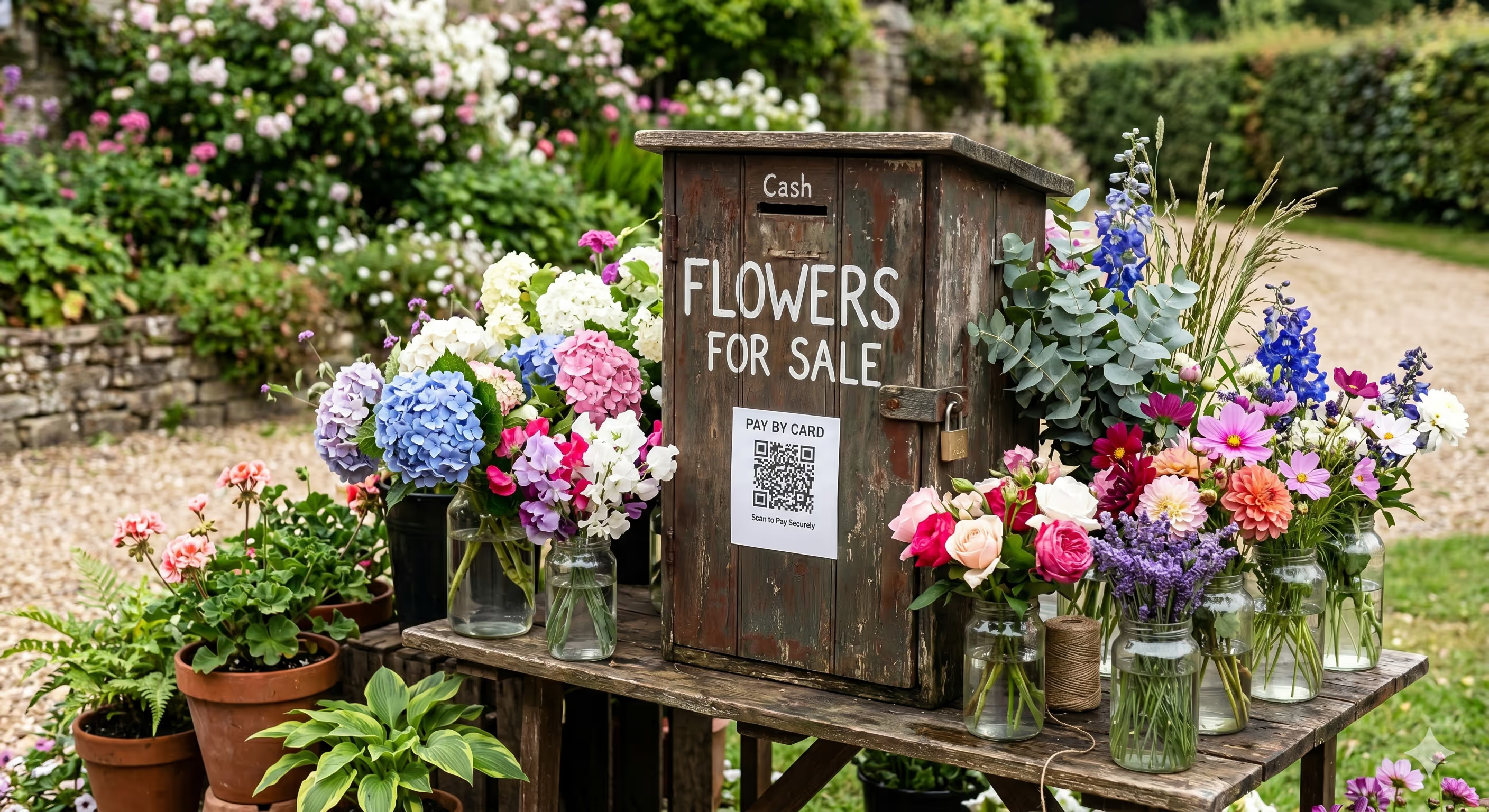
Put a price list, cash instructions and any QR code beside the flowers. Customers should know whether they are paying for one stem, one bunch or the whole jar.
HonestyBox charges 5% per transaction plus Stripe processing fees, with no monthly subscription. Test checkout at the stall: the printed sign needs no power, but customers need mobile data or Wi-Fi to pay.
Common questions
How many bunches should I put out?
Start with a quantity you can check and replace easily. Record what sells and what comes back unsold before increasing it.
Should I use jars or wrapping?
Either can work. Choose a format you can price clearly and prepare consistently, including its packaging cost.
Can a small patch provide a useful income?
It depends on yield, demand, costs and your time. Treat the first season as a measured trial rather than relying on another stall's earnings.
Reviewed 1 November 2026. Check linked guidance and local requirements for your setup.
Add card payments beside the flowers
See HonestyBox for flower stalls for the payment setup, or use the fee calculator before setting your bunch prices.
How can I start a small cut-flower stall at my garden gate in the UK?
Give flower customers another way to pay
Put a HonestyBox QR code beside your bunches and cash tin. Customers without coins can pay by card; 5% per transaction plus Stripe fees.