How to sell Christmas trees from your gate

Check the site before buying stock
A field gate can be a useful selling point if customers can reach it, park safely and load a tree without blocking the road. Walk through that journey before ordering trees or advertising opening dates.
Ask your council about the proposed use, signs, access and any trading permissions. Using your own land does not settle every requirement, and a roadside verge should not be treated as part of your pitch.
Tell your insurer what you plan to sell and how customers will use the site. Plan lighting, stable ground and clear routes for the hours you intend to open.
Know which trees you are selling
Decide whether you will sell cut trees, rooted trees or both. Keep supplier details and records of the species, sizes and quantities you buy or grow.
Compare freshness, shape, handling needs and your supplier's care advice when choosing stock. Offer a manageable range rather than buying every size before you know local demand.
If you are growing your own, work from a proper growing plan and costs over the whole crop cycle. Trees take years of land and care; the sapling price is only one part of the investment.
Check plant-health rules for the stock
Official plant-passport guidance for Great Britain specifically addresses Christmas trees. It identifies rooted trees of any size, cut trees over 3 metres and certain conifer branches or foliage as material with passport requirements.
The stock, destination and sales route matter, including distance sales and supplies to other businesses. Check registration, passport and regional movement requirements with the appropriate authority before bringing trees in or selling them on.
Use the guidance's contacts for England, Wales or Scotland. Northern Ireland has separate arrangements; check with its plant-health authority rather than applying GB guidance automatically.
Price by clear, measurable bands
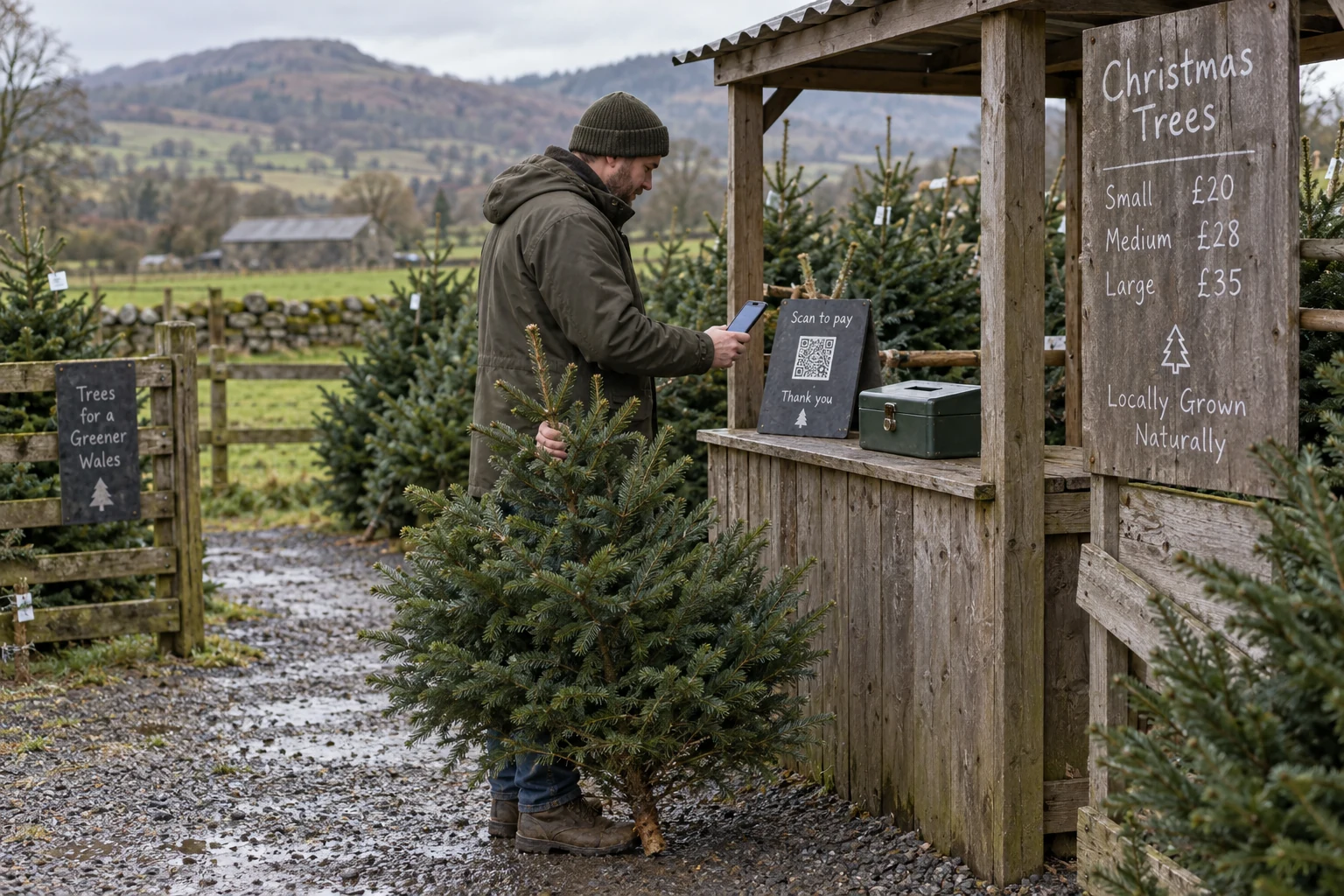
Customers should be able to identify the price without guessing. Group trees by species and height, explain how height is measured, and attach an unambiguous price to each group or individual tree.
Build prices from your growing or wholesale cost, transport, storage, site preparation, handling, payment fees and expected unsold stock. Include your time and any staff you need.
Compare nearby sellers after doing those sums. A lower headline price is no help if it leaves too little to cover the season.
Choose when help will be available
Record enquiries and early sales to learn which opening times suit your customers. Do not assume every seller's busiest days will also be yours.
Large trees, netting equipment and loading can need assistance. Decide whether trees will be netted in advance or whether someone will be present to help, and keep unsuitable equipment out of unattended use.
If you offer an honesty arrangement, make the limits clear: which trees can be collected, the price, payment instructions and how to get help. Check stock and the condition of the site regularly.
Give people a practical way to pay
Keep a cash option if it suits your arrangements. If you are serving customers, compare current in-person payment options and equipment costs.
For self-service sales, a displayed HonestyBox QR code lets customers pay on their own phones. There is no monthly subscription; the fee is 5% per transaction plus Stripe processing fees.
Using Stripe's standard UK card rate of 1.5% + 20p, a £50 payment would cost £3.45 in combined fees and leave £46.55 before other costs. Other card types and account terms can differ; see current pricing and Stripe's published rates.
Test the full checkout at the collection point. Customers need mobile data or Wi-Fi, and a completed payment is separate from a bank payout.
Keep tax records from the start
HMRC's Christmas-tree guidance says growing Christmas trees is generally outside the commercial woodland exemption. It also describes circumstances involving woodland thinnings or felled-tree tops where treatment can differ.
Keep records of cash and card sales, stock and expenses. If you already farm, ask your accountant how the tree activity belongs in your accounts; do not assume a separate stall creates a separate tax allowance.
Our honesty box tax guide is a starting point for smaller sellers. The treatment of your particular growing and sales arrangements may need further advice.
Common questions
Do I need a licence to sell trees?
Check with your council and the relevant plant-health authority. Requirements depend on the site, stock and selling arrangements; there is no useful blanket answer for every gate stall.
Can customers collect while I am away?
Only offer this where the selection, payment and handling arrangements are suitable. Make clear when assistance is needed and available.
What should I do with unsold trees?
Plan ahead for suitable donation, recycling or chipping of cut trees. Rooted stock needs different care, so agree a plan with your grower or supplier.
Reviewed 1 November 2026. Check the linked guidance before each selling season.
Set up the payment point
See HonestyBox for tree stalls for QR payment setup and use the fee calculator to check what a tree sale leaves after payment fees.
What should I check before selling Christmas trees from my farm gate in the UK?
Give tree buyers a card option
Display a HonestyBox QR code beside clear prices and your cash payment instructions. No monthly subscription; 5% per transaction plus Stripe fees.